
Implant Supported Crowns
This nice gentleman has been dealing with ill-fitting lower denture for years. It’s tolerable, but unpleasant. It is a story we hear from denture patients over and over again. Their dentures don’t fit, the “glue” upset their stomach, sore spots develop so they cannot wear their dentures for days, foods get underneath the denture and have to excuse themselves, restaurant menu has nothing soft and appetizing that they can eat.
He doesn’t have to deal with any of that anymore thanks to dental implants. He has the SAME function as he had before he lost his first adult tooth! He can have steak. He doesn’t have to worry about cavities. He doesn’t have to excuse himself to clean under his denture.
Dental Implants Explained by Dr. Alan Ko
Hello, this is Dr. Alan Ko. I love to take the next few moments to talk about dental implants. Dental implants has revolutionized dentistry for the last few decades. Nowadays, patients with missing teeth, we can expect to restore their function and aesthetics with dental implants without having to deal with removable dentures or partial dentures. With advancement of dental implants, now we can expect patients who have dental implants to keep their implants for the rest of their life. We’re enjoying a high success rate for dental implants anywhere north of 98 to 99%. And because of the advancement, we can also perform the surgery with minimal invasiveness and also minimal pain. It is a great tool for us to help outpatients who are suffering for a long time with dentures or partial dentures or periodontal disease. Now, if you have any questions or wondering if dental implants is for you, please do call our office at four seven eight three eight zero zero. Thank you very much.
Dental Implants FAQs
What kind of dentist is best for dental implants?
Success of dental implants is based on surgical planning with technology and experience. 3D imaging produced with a CT scan together with computer designed surgical guide will provide the utmost safety and success for patients.
How much is a top set of dental implants?
Although varies widely with location, complexity, and the type of implants, upper implant-supported bridge (also known as All-on-X, All-on-4) can cost between $25,000 to $35,000.
What is the most expensive part of a dental implant?
Surgical parts and instrumentation, as well as the surgical team’s time and expertise.
How many dental implants should I get?
If you are looking at a full arch fixed bridge restoration, a minimum of 4 implants is required. However, the distribution and diameter of implants really matter. 4 small implants concentrated in the front of the jaw will not support a full arch bridge. Typical treatment in our office is 6 implants distributed equally among the arch.
How long do dental implants last?
When dental implants are placed with 1.5mm of bone surrounding the implant, with healthy keratinized tissue around the implants, and supported a well designed prosthetics, we expect the implants to last a lifetime.
Are implants worth the money?
Even though this is subjective, 9 out of 10 patients who have dentures are happier with implant-supported prosthetics.
Are implants better than real teeth?
Dental implants cannot decay and when placed well can be more resistant to oral bacteria. Think of dental implants as the best tool to replace a tooth when it fails, but keeping natural teeth healthy should still be the top priority.
Are dental implants painful?
When dental implants are placed by a skilled and compassionate dental professional, there should be minimal discomfort at surgery, and minimal pain following the surgery. Most discomfort can be controlled by OTC pain medications.
Who should not get dental implants?
Patients who have a history of head and neck cancer with radiation to the head and neck area usually will have poor healing of the bone. This is also true with patients who have uncontrolled diabetes. Both incidences will have a significantly reduced success rate. Patients with severe TMJ/TMD issues where they cannot open their mouth wide can also have trouble receiving implants.
Can dental implants last 50 years?
The first dental implant was placed in 1965, and year after year, the technology of the technique and hardware are improving. When placed well with bone and surrounding tissue in mind, we expect dental implants to last a lifetime.
Can I get an implant immediately after extraction?
Yes, however, not every case is indicated. It depends on the amount of bone remaining after the extraction, location, density of bone, presence of infection, and ultimately chance of success of the implant. A lot of consideration is placed when considering an immediate placement of implant after extraction. In our office, less than 10% of the dental implants are immediate placement.
What are dental implants, and how do they work?
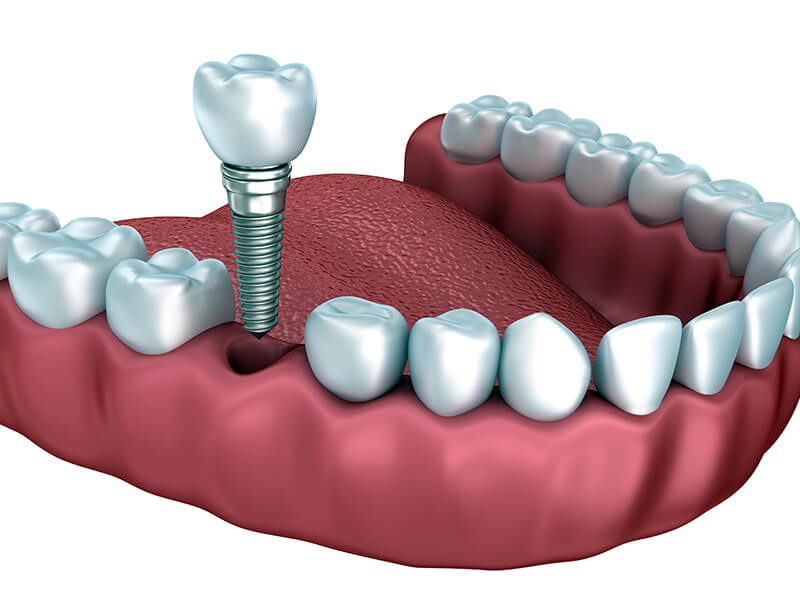
Dental implants are a long-term solution for replacing missing teeth. Dr. Alan Ko places a titanium post into the jawbone, which acts as a new tooth root. Over time, the bone fuses with the implant, creating a strong and durable foundation for a replacement tooth, bridge, or denture.
Who is a good candidate for dental implants?
Most healthy adults are candidates for dental implants, but the ideal candidate must have sufficient jawbone density to support the implant. Dr. Alan Ko will evaluate your oral health, including the condition of your gums and jawbone, to determine if implants are suitable for you. If you lack sufficient bone, bone grafting may be performed before implant placement.
How long does the dental implant process take?
The dental implant process typically takes several months to complete. Initially, Dr. Alan Ko will surgically place the implant into your jawbone. After the implant is placed, a healing period of about 3-6 months is required for the bone to fuse with the implant in an osseointegration process. Once the implant is stable, Dr. Ko will attach a crown, bridge, or denture to complete the restoration. While the process can take several months, it is a permanent solution for missing teeth.
Is the dental implant procedure painful?
The dental implant procedure is generally well-tolerated. Dr. Alan Ko uses pain free local anesthesia technique to numb the area around the implant site, ensuring you remain comfortable during the procedure. Following your procedure, it is normal to experience some mild to moderate discomfort, swelling, or bruising, but this can usually be managed with over-the-counter pain medications.
How long do dental implants last?
Dental implants are designed to be a long-term solution. With proper care, they can last 20 years or more. The implant itself (a titanium post) is incredibly durable, but due to natural wear and tear, the crown or restoration placed on top of the implant may need to be replaced every 10-15 years. However, I often say to patients, some implants can outlast our own teeth! Regular oral hygiene practices, including brushing, flossing, and routine dental checkups with Dr. Alan Ko, will help extend the lifespan of your dental implants.
Does insurance cover dental implants?
Traditional insurance plans often do not fully cover dental implants, as they are considered cosmetic or elective procedures. However, many dental insurance plans will cover part of the cost, especially if the implant is needed for functional reasons (e.g., replacing a missing tooth that affects chewing or speech). Dr. Alan Ko’s office works with various payment options and can assist you in exploring financing plans to make implants more affordable.
How do I take care of my dental implants after the procedure?
After receiving dental implants, it’s essential to follow a proper oral care routine to ensure the success of the treatment. Dr. Alan Ko recommends brushing twice daily with a soft-bristled toothbrush and using floss or interdental brushes to clean around the implant and restore it. To prevent damage, avoid chewing hard foods or using your implant as a tool. Regular dental visits are also important for monitoring the health of your implants.
